

Blog
Best Scaffold Tower and Platforms for Conservatory Roof Cleaning

Best Scaffold Tower and Platforms for Conservatory Roof Cleaning
Cleaning a conservatory roof safely is more challenging than it first appears. While the task might seem straightforward, it involves working at height on or near fragile, often slippery surfaces such as glass or polycarbonate panels. Add in awkward access, limited space around the structure, and uneven ground, and the risks quickly increase.
For homeowners and professionals alike, the key to safe and effective cleaning is choosing the right access equipment. Depending on the height and layout of your conservatory, this could range from low-level platforms and podium steps to full aluminium scaffold towers.
In this comprehensive UK guide, we’ll help you understand:
- 🔹 The safest ways to clean a conservatory roof
- 🔹 The different types of access equipment available
- 🔹 Which solution is best for your specific conservatory
- 🔹 How to avoid common mistakes
Why Cleaning a Conservatory Roof Is Risky
Conservatory roofs are not designed to be walked on. Even when they look sturdy, they can be:
- 🧼 Slippery due to algae, moss, or soap residue
- 🥚 Fragile, especially older polycarbonate panels
- 📐 Steeply angled, increasing the chance of slipping
- 🚫 Difficult to access safely from the ground
Many accidents happen when people:
- ⚠️ Overreach from ladders
- ⚠️ Lean directly onto the roof
- ⚠️ Work on unstable ground
👉 The safest approach is always to work from a secure platform beside the structure, not on top of it.
Why Ladders Are Not Suitable
When looking at the UK market for conservatory cleaning, you will generally see three methods: the telescopic water-fed pole, the “ladder and stay” method, and the scaffold tower/platform.
While water-fed poles are excellent for a quick rinse, they often lack the “elbow grease” required to remove thick lichen or ingrained grime. Professional window cleaners often use them, but even they struggle with the very apex of a large Victorian or Edwardian conservatory. Ladders, on the other hand, are inherently unstable for lateral movement, furthermore, they are not designed for prolonged or sideways work. To clean a roof, you need to scrub, which means moving your centre of gravity—a dangerous move on a traditional ladder.
Ladders are still widely used, but they are not designed for prolonged or sideways work.
Key limitations:
- 🚫 No guardrails or fall protection
- 🚫 Limited working area
- 🚫 Easy to lose balance when reaching sideways
- 🚫 Frequent repositioning required
Even for relatively low conservatories, ladders introduce unnecessary risk.
👉 In most cases, a ladder should only be used for access—not for working.
Understanding Working Height for Cleaning
When choosing access equipment for conservatory cleaning, it’s important to understand that “working height” can mean different things depending on the task.
In practice, there are two valid ways to calculate working height—one for simple reach tasks, and one for practical cleaning work.
1️⃣ Standard Working Height (General Access)
👉 Working Height = Platform Height + 2m
This is the industry-standard formula, based on a person standing on the platform and reaching overhead with arms extended.
Best suited for:
- ✔️ Light cleaning or rinsing
- ✔️ Smooth, easy-to-clean surfaces
- ✔️ Tasks where you are simply reaching (not applying force)
Typical examples:
- 💧 Using a water-fed pole for rinsing
- 🪟 Cleaning glass that doesn’t require scrubbing
- 🔍 General inspection or maintenance
👉 In these situations, working height = your maximum vertical reach.

2️⃣ Recommended Cleaning Reach (Practical Use)
👉 Recommended: Working Height = Platform Height + 1m
For conservatory roof cleaning—especially when removing algae, moss, or ingrained dirt—the standard formula becomes less practical.
This is because effective cleaning requires:
- 🧽 Applying downward pressure (not just reaching up)
- 📐 Maintaining a good working angle for the brush
- 💪 Staying balanced and in control
If you rely on the full +2m reach, you are often forced to work above shoulder height, which reduces control and increases the risk of overreaching.
👉 By positioning the platform higher (closer to the work area), the +1m approach provides:
- ✅ Better leverage for scrubbing
- ✅ A flatter, more effective cleaning angle
- ✅ Improved safety and stability
Which One Should You Use?
- 🔹 Use +2m (Standard) → for easy reach-only cleaning
- 🔹 Use +1m (Recommended) → for practical cleaning that requires effort and control
Key Takeaway
👉 Working height is not just about how high you can reach—it’s about how effectively and safely you can work.
For most real conservatory roof cleaning tasks, the +1m “Cleaning Reach” approach delivers better results, better control, and improved safety.
Types of Conservatory Roofs (And Why It Matters)
Different roof designs affect how you access and clean them:
Lean-to Conservatories
- 🧱 One side attached to house wall
- 📈 Often higher at the back
- ⬆️ Requires greater working height
Victorian / Edwardian Styles
- 🔺 Multi-angled roofs
- 🔄 Require frequent repositioning
P-Shaped or Large Conservatories
- 📏 Wide surface area
- 🏗️ Benefit from larger platforms or towers
Low Garden Conservatories
- 🪜 Easier to access
- ✅ Suitable for low-level platforms or podiums
👉 Matching your equipment to the shape and height is crucial.
Compact Footprint
Conservatories are often surrounded by:
- 🧱 Fences
- 🧱 Garden walls
- 🚶 Narrow pathways
A narrow or micro-width tower is often the best fit.
Adjustable Height
You may need to:
- 🧼 Clean different sections
- 🪜 Work around slopes or steps
Look for towers with height adjustable baseplates or lockable wheels.

The Best Access Solutions by Conservatory Type
1️⃣ Low Conservatories & Indoor Maintenance (Up to ~3m Working Height)
For smaller structures or internal maintenance, you don’t always require a full scaffold tower. While we generally recommend a Platform Height + 1m formula for heavy scrubbing on tall roofs, this rule can be relaxed for low-level conservatories. These structures are usually easy to access, shallow in pitch, and require less aggressive scrubbing force, allowing effective cleaning from a lower standing position using telescopic tools.
👉 In practice, platforms with a ~1m standing height can comfortably handle conservatories up to around 3m, especially for:
- ✨ Light to moderate cleaning
- 📅 Regular maintenance
- 🏠 Indoor or sheltered work
1.1 LOYALDECK (Heavy-Duty Platform)
The LOYALDECK is a professional-grade, low-level platform designed for stability and speed. With a platform height of 0.92m, it provides a comfortable working reach of up to 3m for low-pitch roofs and interior ceilings.
Key Advantages:
- ⚡ Extremely fast setup (often under a minute)
- 📦 Compact and easy to store
- 🛡️ Guardrails for added safety
- 📏 Adjustable working height
👉 Best for: Bungalows, low lean-to conservatories, and comprehensive indoor cleaning.

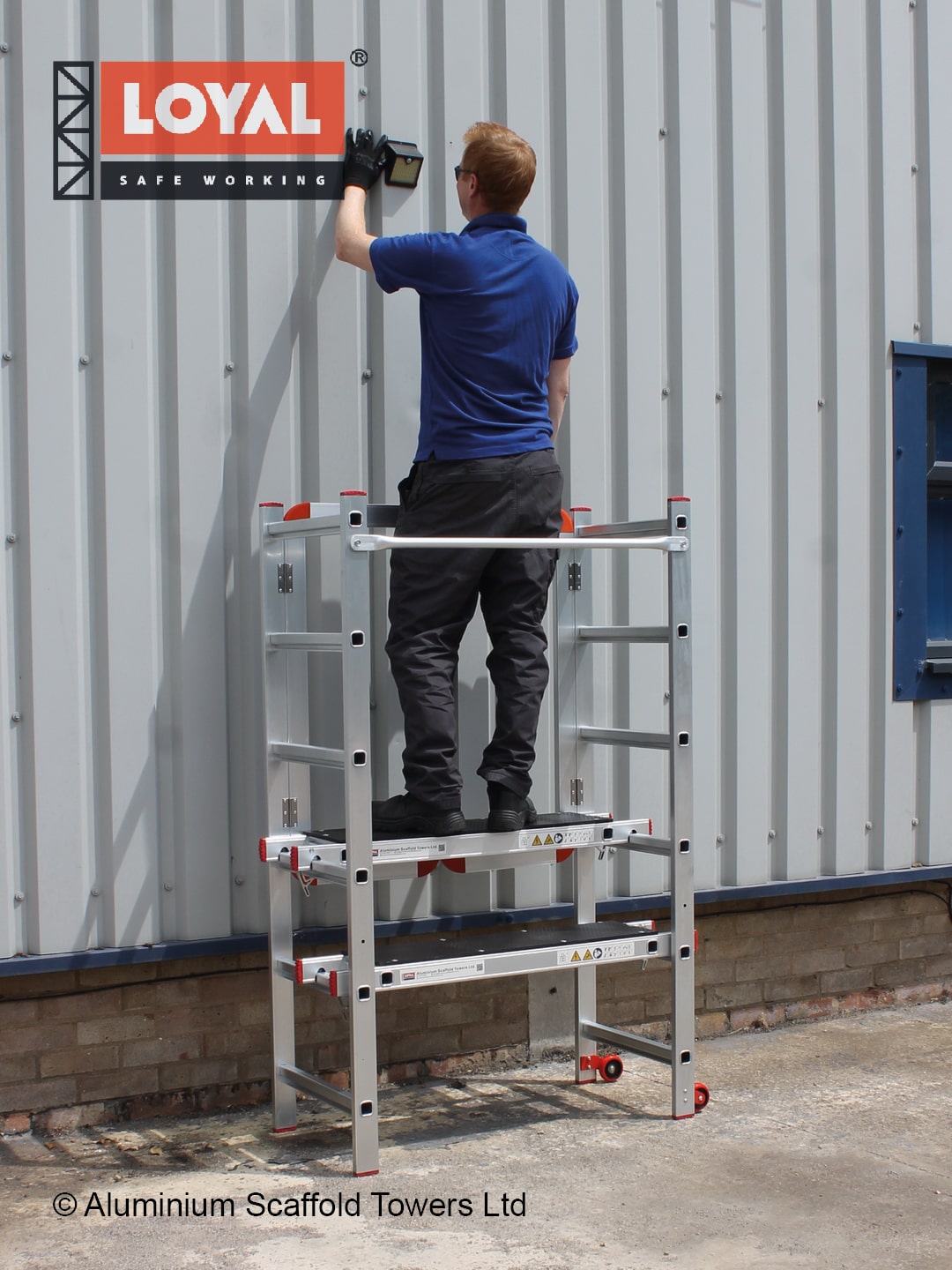
1.2 LOYAL 500 (Light-Duty Folding Platform)
A lighter, highly portable alternative, the LOYAL 500 features a platform height of 1.02m. It is specifically designed for:
- 🧹 Indoor tasks
- 🪜 Very low-level access
- 🛠️ Occasional DIY use
However:
- ⚠️ Less suited to outdoor uneven ground
- ⚠️ Lower overall stability compared to heavy-duty platforms
👉 Best for: Interior window cleaning, light DIY tasks, and occasional exterior maintenance on firm ground.
2️⃣ Small to Medium Conservatories (2.75m to 4.0m Working Height)
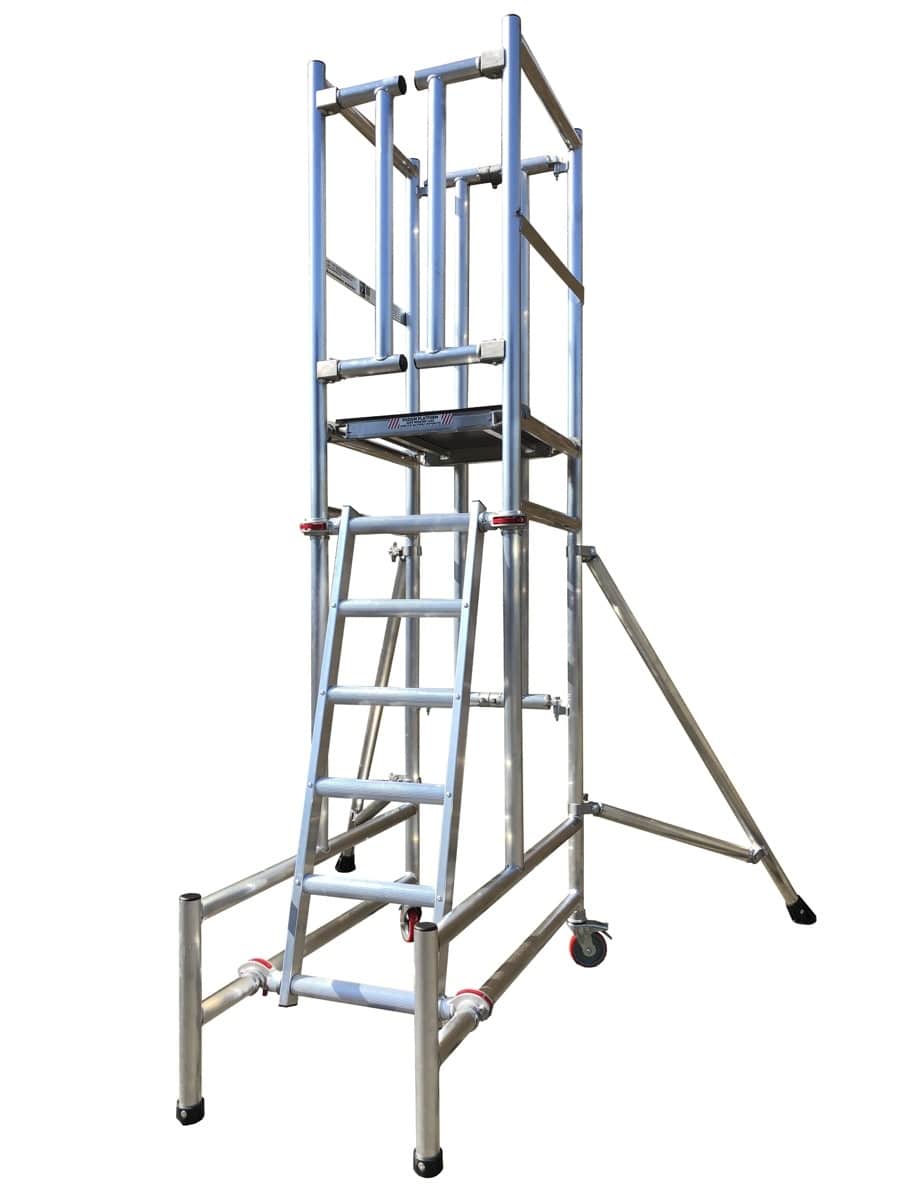
2.1 Podium Steps (BS8620 Standard)
Podium steps are one of the safest alternatives to ladders.
Key features:
- 🛡️ Fully enclosed working platform
- 🔄 360° guardrail protection
- 📐 Wide, stable base
- 🚶 Easy to reposition
Why they’re popular:
- ✅ Significantly safer than ladders
- ⏱️ Ideal for short-duration tasks
- 📦 Compact and easy to transport
Limitations:
- ⚠️ Limited maximum height
- ⚠️ Not efficient for wide roof coverage
👉 Best for:
- 🏡 Small conservatories
- 🖼️ Frame and edge cleaning
- 🛡️ Safer short-duration work
3️⃣ Choosing the Right Tower by Use Case
Selecting a tower depends on whether you are a homeowner performing occasional maintenance or a professional requiring equipment for daily commercial use.
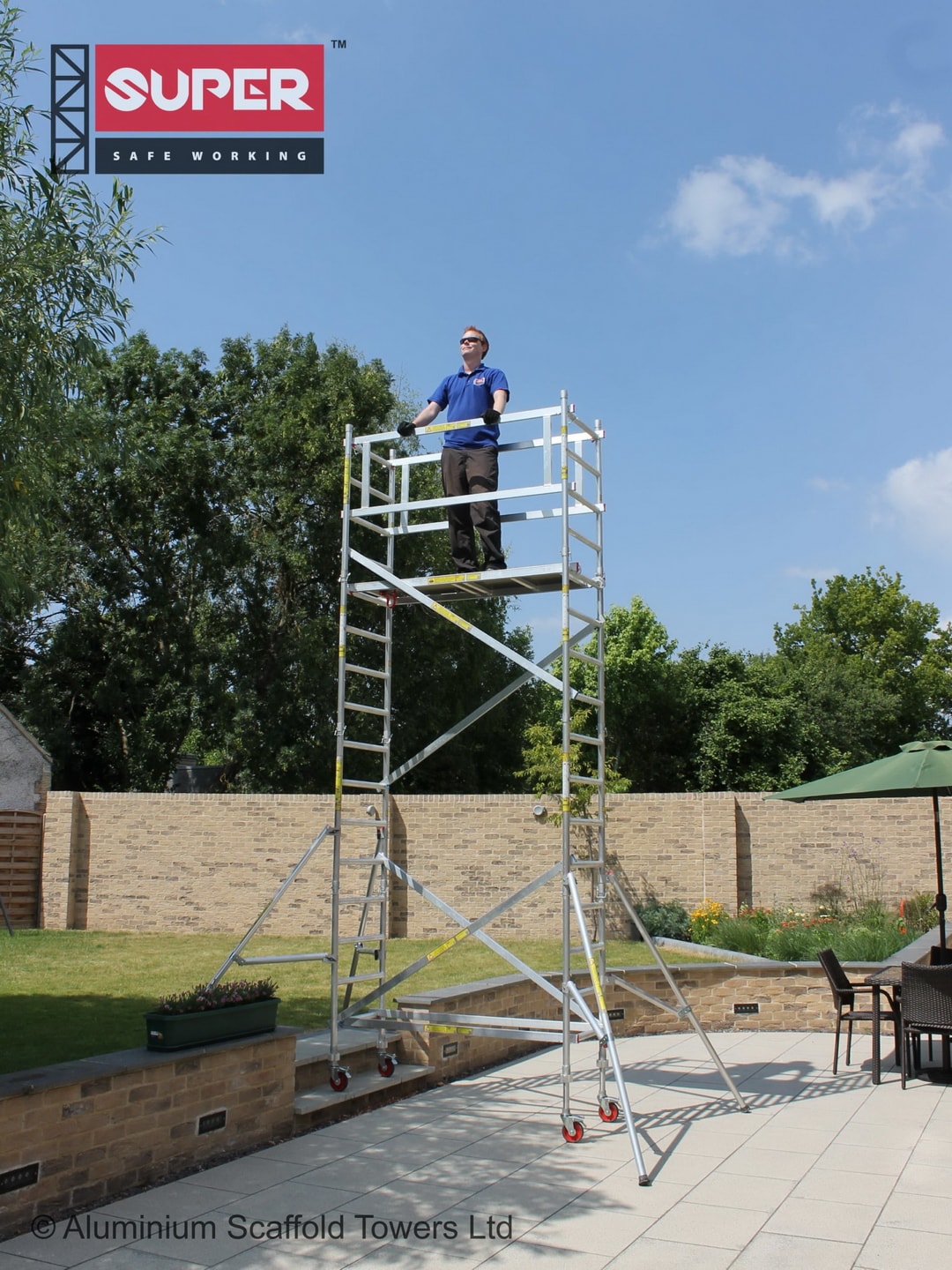
3.1 Domestic DIY Towers – Recommended for Homeowners
Platform Width: 60cm
If you are cleaning your own conservatory roof once or twice a year, a DIY scaffold tower provides the ideal balance of safety and value. These towers are specifically designed for residential environments where storage space and ease of handling are priorities.
- ✅ Best Use Cases: Small to medium residential conservatories and bungalows.
- 🔧 Assembly: Designed for one-person setup in approximately 5–15 minutes.
- 📏 Design: The narrow 60cm width is perfect for navigating garden paths and tight spaces between fences and glass.
- 📐 Reach: Following the “Cleaning Reach” logic, a tower with a 2m platform height provides a comfortable 3m working height for scrubbing the roof.
3.2 Trade King Towers – Recommended for Business & Trade
Platform Width: 73 cm
For professional window cleaners or maintenance contractors, the Trade King range is a high-performance solution built for regular use. Unlike basic DIY models, these towers offer increased durability and a more robust frame.
- ✅ Safety Standards: Fully EN 1004 certified by TÜV, ensuring it meets strict safety requirements for the workplace.
- 🧩 Modular Design: Allows for flexible height adjustments to suit different property types, from standard lean-tos to tall Victorian structures.
- ⚡ Performance: Features a wider 73cm platform for better stability and faster assembly compared to entry-level systems.
- ✅ Best Use Cases: Regular property maintenance, larger conservatories, and two-storey residential projects.
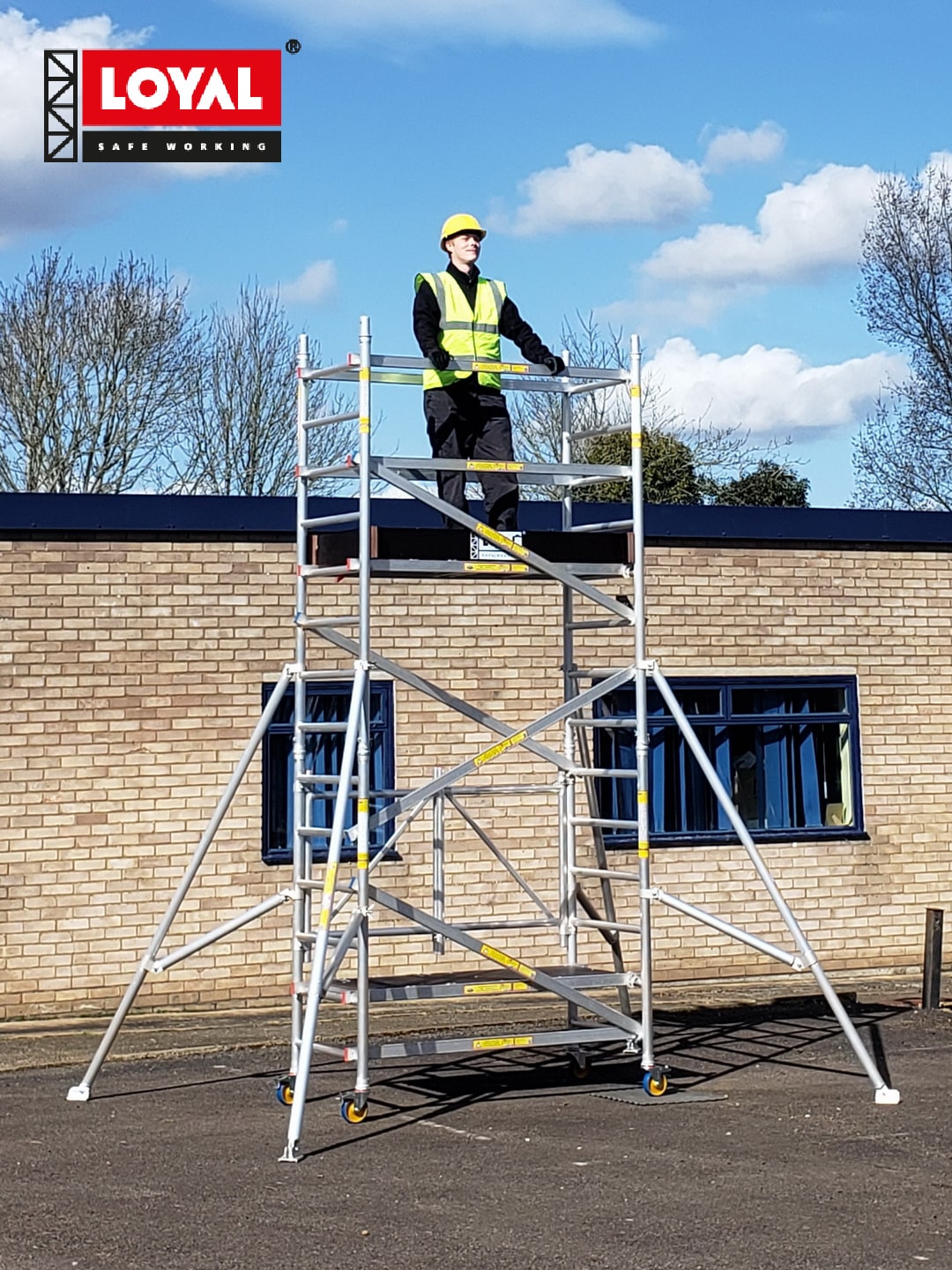
3.3 Industrial Towers – Recommended for Heavy-Duty & Frequent Use
Platform Width: 85cm (Single) or 145cm (Double)
For commercial cleaning businesses or intensive industrial applications, Industrial scaffold towers provide the maximum possible strength and platform space. These are designed to withstand the rigours of daily transport and heavy-duty site work.
- ✅ Safety Standards: Fully EN 1004 certified and TÜV approved, representing the highest tier of safety for professional height access.
- 🏋️ Maximum Capacity: Built with heavy-duty aluminium and larger platform areas to accommodate multiple workers or heavy cleaning equipment and water tanks.
- 🔄 Versatility: Available in single-width (0.85m) for narrow access or double-width (1.45m) for maximum working area on massive commercial glass roofs.
- ✅ Best Use Cases: Large-scale commercial conservatories, professional cleaning fleets, and high-frequency contract work.

Summary: While the Domestic DIY Tower is the go-to choice for homeowners, Trade King and Industrial Towers are the recommended standards for business use. Both professional ranges are EN 1004 certified, offering the highest levels of safety and stability for trade environments.
Step-by-Step: How to Clean a Conservatory Roof Safely
Using the right equipment is only part of the process.
1️⃣ Set Up Your Equipment
- 🌍 Ensure firm, level ground
- ⚖️ Fit stabilisers if required
- 🔒 Lock all castors, if any
2️⃣ Use the Right Cleaning Tools
- 🧹 Telescopic brush or water-fed pole
- 🧴 Mild cleaning solution
- 🚫 Avoid abrasive tools
3️⃣ Work in Sections
- 🧽 Clean small areas at a time
- 🚚 Move the platform instead of overreaching
4️⃣ Rinse Thoroughly
- 💧 Prevent streaks and residue
- 💧 Use clean water where possible
Common Mistakes to Avoid
- 🚶 Standing on the roof
- 🪜 Overreaching from ladders
- 📉 Using unstable platforms
- 🌧️ Ignoring weather conditions
- 📏 Choosing equipment that is too small
👉 The biggest mistake is underestimating height requirements.
Accessories That Improve Safety and Efficiency
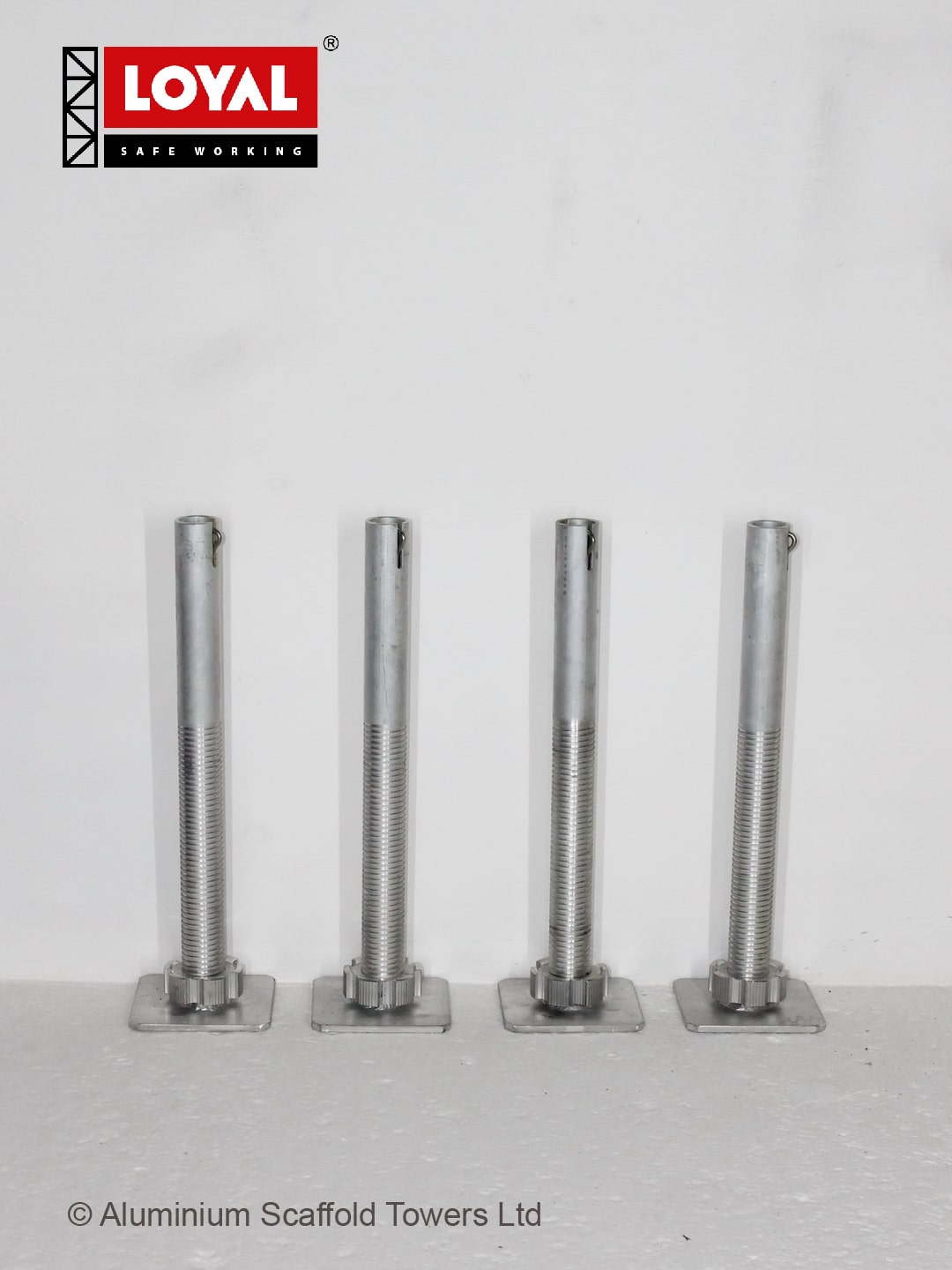
- ⚙️ Height Adjustable Baseplates / Wheels for uneven ground
- ⚖️ Outriggers / stabilisers
- 🧰 Tool trays
- 👟 Non-slip platforms
These small additions can significantly improve both safety and productivity.
Choosing the Right Solution – Quick Summary
- 🔹 Up to 3m working height (Quick Access) → LOYALDECK or Podium Steps
- 🔹 Up to 3m working height (Full Roof Scrub) → Podium Steps or Domestic DIY Towers
- 🔹 3m – 5m working height → Domestic DIY Towers or Trade King Towers
- 🔹 5m+ or frequent use → Trade King Towers or Industrial Towers
👉 This ensures you get the safest solution without overspending.
❓ FAQs – Conservatory Roof Cleaning Access Equipment
1. What is the safest alternative to using a ladder?
A podium step or scaffold tower is a much safer alternative to a ladder. Unlike ladders, they provide a fully enclosed platform with guardrails, allowing you to work without overreaching and significantly reducing the risk of falls.
2. Can I use a low-level platform instead of a scaffold tower?
Yes, but only for conservatories requiring up to around 3m working height. Some tall podium steps can reach upto 4m. Taller structures will need a scaffold tower.
3. Are podium steps safer than ladders?
Yes. Podium steps provide a fully enclosed platform with guardrails, making them significantly safer than ladders.
4. What height scaffold tower do I need?
For general cleaning, use Working Height = Platform Height + 2m. For scrubbing or harder-to-clean roofs, use +1m for better control. As most UK conservatories are up to 4m high, a platform height of 1m–3m is typically suitable.
5. My conservatory has narrow access. Will a tower fit?
Micro-width towers, typically 60cm wide, are designed to fit through tight garden paths and narrow gaps. If you are working on slopes or steps, ensure the tower has adjustable legs to keep the platform perfectly level and safe.
6. Is it worth upgrading from a DIY tower to a Trade model?
Domestic DIY towers offer the best value for homeowners performing annual maintenance. Trade King and Industrial models are recommended for professionals or very tall structures because they are EN 1004 certified, more durable for frequent transport, and modular for varying heights.
Conclusion
Cleaning a conservatory roof safely requires more than just effort—it requires the right equipment. Low-level platforms and podium steps are excellent for smaller jobs, but for most conservatories, a scaffold tower is the safest and most effective solution. By choosing the correct access equipment for your height and layout, you can:
- 🛡️ Work more safely
- ⚡ Clean more efficiently
- ✨ Achieve better results
Ready to get started? Explore our full range of scaffold towers and platforms today for the UK’s best deals on height access equipment.
